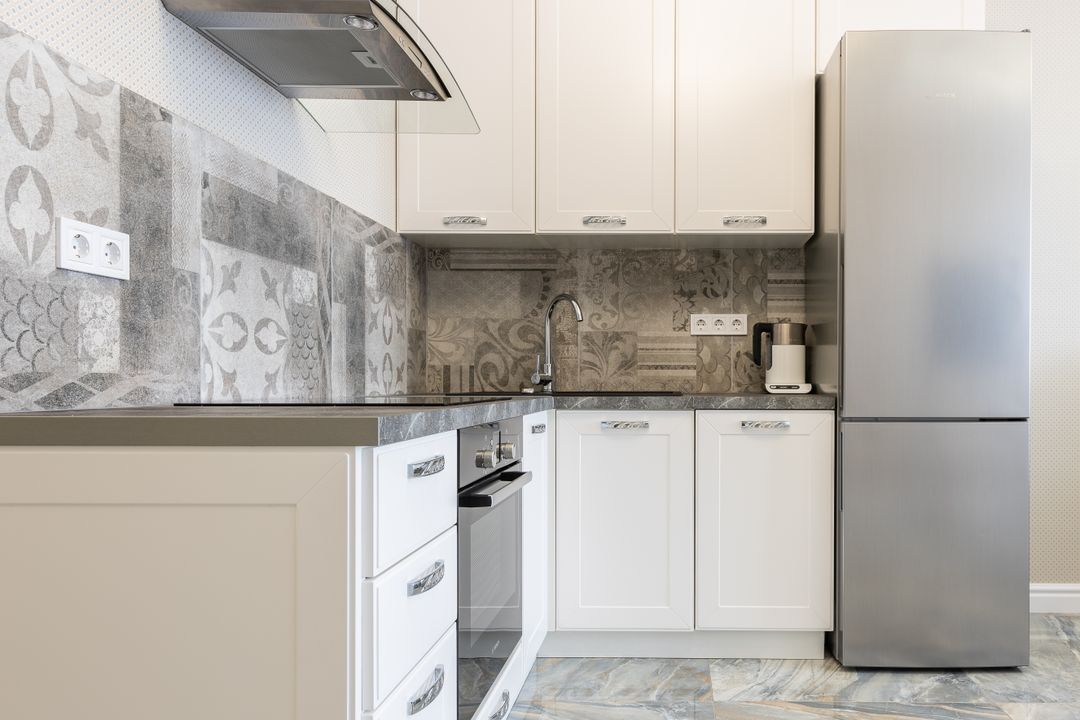
Why cabinet grease feels sticky
Tiny droplets of cooking oil settle on nearby cabinet doors, handles, and upper edges. Dust sticks to the film, and repeated cooking adds layers that a quick dry wipe may spread rather than remove. Cabinets near the stove often collect the most residue.
Treat the buildup as a cleaning problem with a finish-specific solution. Painted wood, laminate, veneer, and unfinished wood do not all tolerate the same products or amount of moisture.
Check the finish before choosing a cleaner
Start with the cabinet manufacturer's care instructions. For a finish that permits it, use a small amount of mild dish soap diluted in warm water. Test a hidden spot and let it dry before treating the visible doors. If the finish is unknown, ask the installer or cabinet maker for guidance.
Avoid oven cleaner, abrasive powders, scouring pads, and strong solvents. Do not assume citrus degreasers, vinegar, or baking soda are safe for paint or wood coatings. An unfinished or deteriorating surface may need professional advice before wet cleaning.
Soften residue without soaking the door
Remove loose dust with a soft cloth. Lightly dampen a microfiber cloth with the approved solution and wring it well. Wipe a small section, giving the cleaner only the contact time allowed by its instructions. Apply liquid to the cloth rather than spraying it into hinges, seams, or cabinet edges.
Use gentle repeated passes and switch to a clean part of the cloth as grease transfers. A soft detail brush may help around suitable handles, but keep moisture out of joints. Do not scrape with a blade or let a wet cloth sit on the finish.
Remove cleaner residue and dry promptly
If the cleaner requires rinsing, wipe with a separate, barely damp cloth. Dry immediately with a soft towel, paying attention to lower edges and seams. Work one door at a time so water does not linger while you clean the rest of the kitchen.
If grease remains, repeat the gentle process or use a cabinet-approved degreaser exactly as labeled. Stop if paint transfers to the cloth, the surface becomes tacky, or the finish changes color or sheen. Those changes can indicate finish damage rather than leftover dirt.
Keep cooking buildup under control
Wipe fresh splashes once surfaces are cool, and use the range hood as intended during cooking. Clean or replace its filters according to the appliance manual. Regularly cleaning handles and cabinet fronts reduces the chance of a thick sticky film developing.
For a whole-room routine, see our kitchen deep-cleaning guide. When arranging deep cleaning, mention greasy cabinet fronts and confirm whether cabinet interiors are a separate task.
- Identify the finish first
- Test a hidden spot and let it dry
- Use a lightly damp cloth, not a soaked door
- Dry edges and seams promptly
- Stop if the finish changes