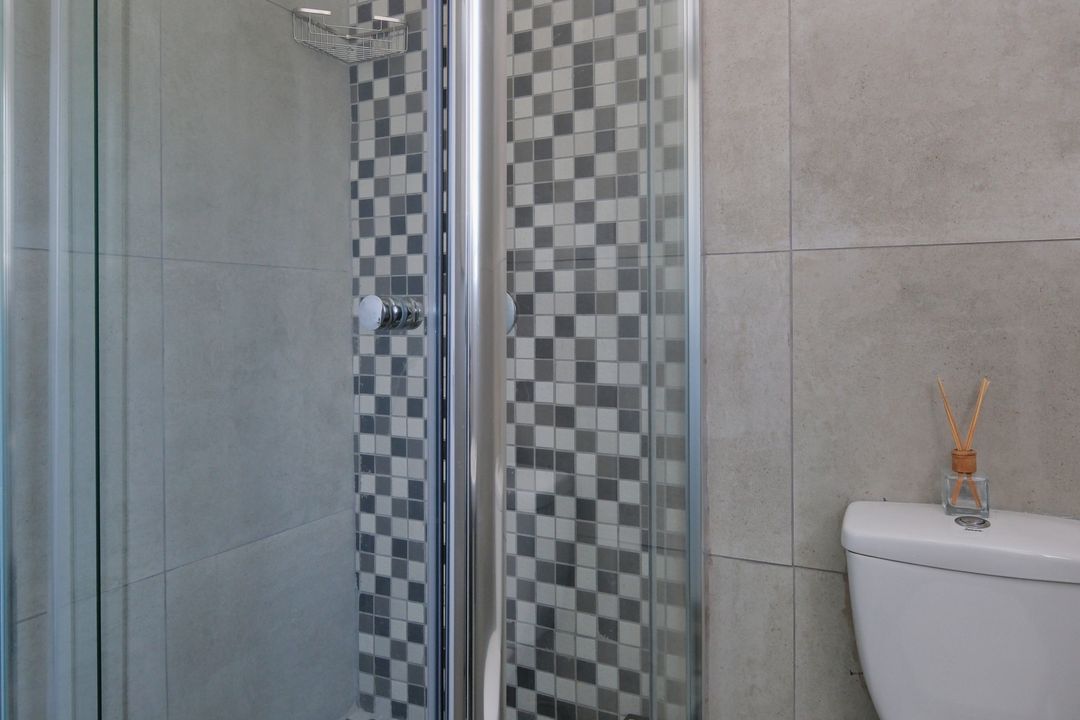
Identify mineral deposits and other haze
Water can leave dissolved minerals on glass as it evaporates. The resulting white spots or cloudy film may also contain soap residue, so a single wipe with a general cleaner does not always clear the surface.
Some shower doors have protective coatings that require specific care. Check the door manufacturer's instructions before choosing a product. Permanent etching can resemble removable buildup; cleaning cannot always restore glass that has been damaged.
Protect the surfaces around the glass
Choose a product labeled for your shower glass and coating. Many mineral removers are acidic, and overspray or runoff can damage marble, limestone, grout, metal finishes, or sealants. Check compatibility with everything the cleaner could touch.
Ventilate the room and use the protection specified on the label. Never mix a mineral remover or vinegar with bleach or another cleaner. Remove previous cleaning products as directed before starting a different treatment.
Treat a small area with a compatible remover
Remove loose dirt and ordinary soap residue using the manufacturer's recommended routine. Then test the approved mineral remover in an inconspicuous area. Follow its application instructions and contact time; do not let it dry on the glass unless the label specifically allows it.
Use a soft cloth or a tool expressly approved for the door. Avoid steel wool, abrasive pads, and razor scraping unless the glass manufacturer specifies a safe method for that exact surface. Repeated gentle treatment is safer than forceful scrubbing.
Rinse, dry, and assess the result
Rinse thoroughly as the product instructions require, including areas where runoff could collect. Remove excess water with a suitable squeegee and dry edges with a clean microfiber cloth. Evaluate the glass after it dries rather than judging through a film of water.
If approved cleaning leaves the same cloudy patch, stop escalating products. Ask the installer or a glass-care professional whether the marks are etched glass, coating wear, or another issue. Stronger acid is not a reliable repair for permanent damage.
Reduce new spots between cleanings
Squeegee after each shower and use appropriate bathroom ventilation. Removing droplets before they dry reduces the minerals left behind. Follow any coating-maintenance instructions instead of applying an automotive water repellent or unapproved polish.
See our bathroom tile and grout guide for surrounding surfaces. When booking deep cleaning, describe the deposits and any special glass coating so the cleaning scope can be confirmed.
- Check for a protective glass coating
- Keep acidic runoff away from sensitive surfaces
- Never mix cleaning products
- Rinse and dry after treatment
- Seek advice for persistent haze or etching