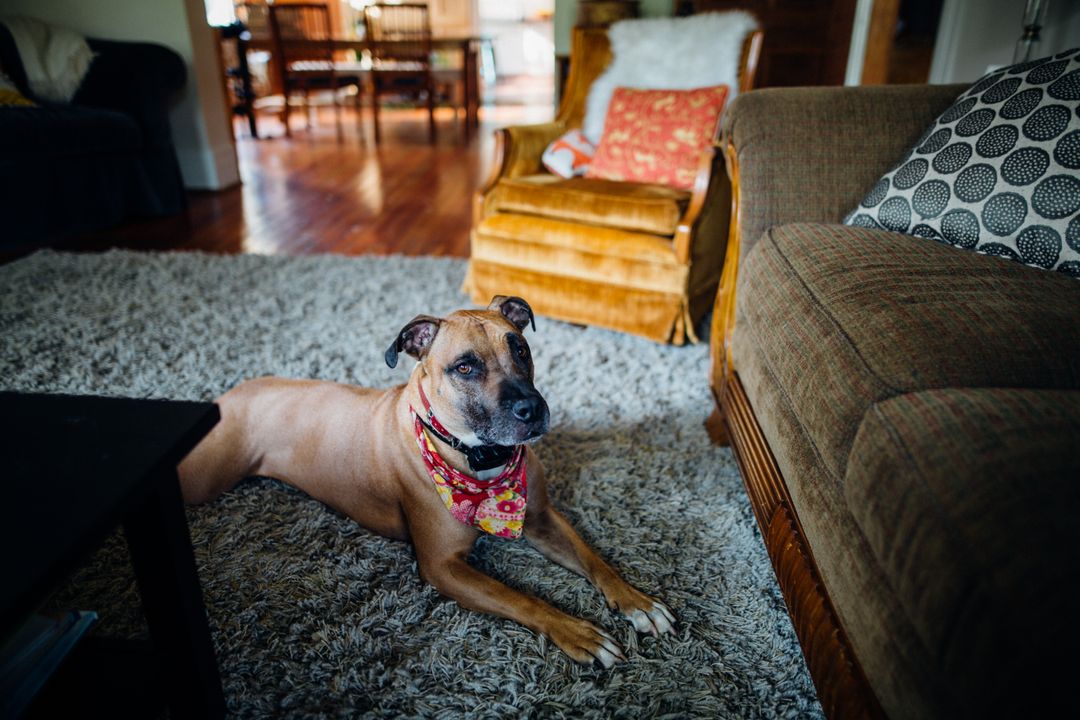
Start with the carpet care instructions
Before choosing a treatment, identify the carpet fiber and any manufacturer restrictions. Wool, specialty rugs, and carpets with delicate dyes may need a different approach from synthetic carpet. A product labeled for pet stains is not automatically suitable for every material.
Keep pets and children away from the affected area while you work. Use gloves, ventilate as the product label requires, and test a hidden spot for color or texture changes before treating the visible stain.
Blot fresh accidents instead of scrubbing
Lift solid material carefully without pushing it into the fibers. For liquid, press with a clean white absorbent cloth or paper towels, working from the outside toward the center. Replace the cloth as it becomes wet.
Avoid aggressive rubbing, which can spread the mess and damage the pile. Use only the amount of water or cleaning solution permitted by the carpet and product instructions. Flooding a spot can carry contamination deeper into the backing and padding.
Choose a compatible pet-odor treatment
An enzyme-based pet cleaner can be an option when both its label and your carpet guidance permit it. Follow the specified amount, dwell time, and drying process; wiping it away immediately may not match the product’s intended use.
Do not combine it with bleach, ammonia, disinfectants, or another stain remover. Stacking products creates safety risks and may interfere with the treatment. If you have already applied something, tell a professional what you used before further work begins.
Let the area dry fully
Follow the label for any extraction or residue-removal step and keep the area off-limits until it is dry and safe to use. Improve airflow where appropriate, but do not use a hair dryer or other concentrated heat to force a quick result.
Avoid treating a urine spot with steam as your first step. A specialist can advise on an appropriate process for the contamination and carpet construction. Recheck the area only after drying instead of assuming a damp, freshly scented spot is resolved.
Know when the problem is below the surface
A persistent odor may come from contamination in the backing, underlay, or subfloor rather than the carpet pile alone. Repeatedly soaking the same patch is not a reliable way to solve that problem.
Contact a carpet-cleaning specialist for old stains, extensive contamination, delicate fibers, or recurring smells. Some cases need work on the padding or flooring beneath the carpet. No household recipe can promise complete odor removal or restoration of damaged fibers.
Plan for a cleaner pet-friendly home
Keep an appropriate spot-treatment kit available, wash pet bedding according to its care label, and record where repeat accidents occur. If accidents are new or unusual, seek veterinary advice instead of treating them solely as a housekeeping issue.
For routine household cleaning, contact Solara and share your pet arrangements before the visit. Carpet extraction and pet-odor remediation should be confirmed separately; they are not implied by a standard home-cleaning appointment.
- Check fiber and product compatibility
- Blot rather than scrub
- Never mix treatment products
- Avoid oversaturating carpet and padding
- Use a specialist for persistent or extensive contamination